The Martian, The Dust Bowl, and The Will to Live

This weekend my husband and I went to see The Martian. It was every bit as good as I’d hoped, maybe even a little better. I know I’m enjoying a movie when I don’t analyze plot and characterization and just get pulled into the story.
At one point, after all seemed lost, I thought about the strong will to survive. How hard people will strive to keep going. It takes such strength, such energy, such grit.
Toward the very end of the film (don’t worry, this is no spoiler) the protagonist Mark says:
“At some point, everything’s gonna go south on you and you’re going to say, this is it. This is how I end. Now you can either accept that, or you can get to work. That’s all it is. You just begin.”
Because the folks from The Dust Bowl are constantly in the front of my mind these days, I thought of them. 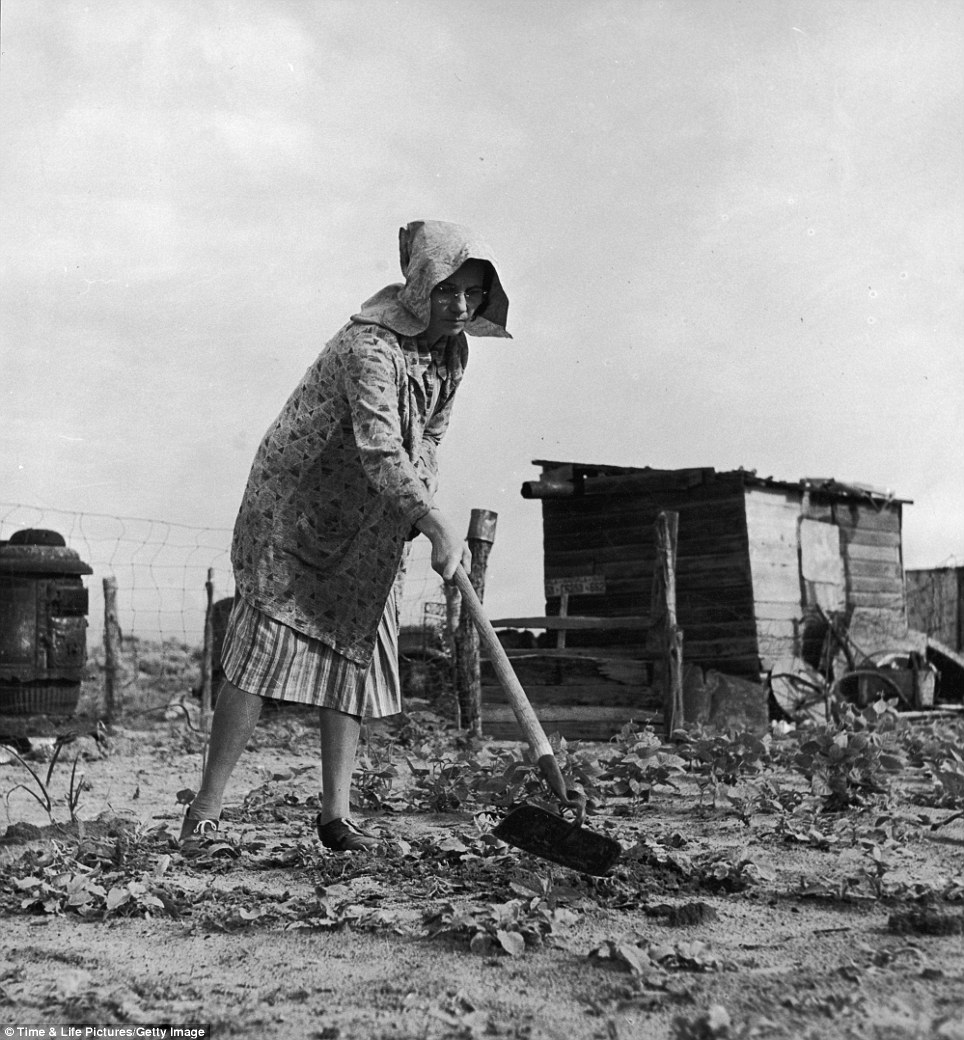
I think of the women who planted gardens, even though they had to fight the dust every day in order to save their crop. How hard they fought to keep their homes clean, even though a dust storm was just days away, ready to bury them yet again.
I’m mindful of the men who fought off the jackrabbits, who got up each morning to tend the dead land, who believed the rain would come some day. The towns full of people who stuck it out, fighting for their land.
And I think about those I’ve known. Friends and family who have shown such a strong will to live. Through illness and hard times, financial insecurity and relational problems.
It comes from this deep an inexhaustible belief that life matters. That we have a purpose.
It takes grit, my friends, to make it. Grit to stand in the face of defeat and refuse to backdown.
It takes grit to begin.
*NOTE: A Cup of Dust officially releases tomorrow (Oct. 27). You can preorder the ebook today. ALSO: You’re invited to a Release Day Online Facebook Bash! Giveaways, videos, fun…who could want anything more! And all from the comfort of your own home. Hope you’ll join me!
Pearlie Lou, Grandma Pearl, and My Favorite Necklace

You know what I love? Book release parties. Yeah, I like being the center of attention (I’m the youngest of four…of course I love it). And it’s fun to see copies of books in the hands of eager readers.
But the really great part is that it ends up being a reunion. I see friends and family that I might only otherwise run into at a funeral.
A book party is a way better way to get together.
On Tuesday at Baker Book House I talked about the Dust Bowl, give away some fun prizes, and signed books (along with getting so many hugs that my heart was busting). What I neglected to do was talk about my necklace.

My beautiful sister made this for me several years ago. It’s a picture of my grandma when she was young. I imagine she was 14 or 15.
Her name was Pearl Louise.
Just like the protagonist in A Cup of Dust.
My grandma has been gone for about 18 years or so. I miss her very much. She was the kind of grandma I saw on the regular. We only lived a few miles from each other. She spoiled us with candy and pop and cookies.
And she’d tell me stories. I loved hearing stories from when she was a kid, running around the family farm in Blissfield, Michigan and getting into trouble with her cousin Gerald.
She sure had a lot of stories.
But she also kept a lot of them to herself. I know pieces of her silent history. That she was sent to live on that farm in Blissfield with her aunt and uncle by her mother because times were hard. I do know that she quit school after eighth grade. That she married young and became a mother soon after.
And I do know that her baby isn’t with us. What happened or where he is, I just don’t know that. It’s a mystery my family may never solve.
I know that her first marriage didn’t last long. There’s family mythology surrounding that. But what is the truth?
There’s a large gap between Grandma Pearl when she was 16 (1931) until she met my grandpa in the 40’s.
They met in what Grandma called a “Beer Garden” and they danced. “Oh, but your grandpa could dance,” she’d tell me. I love imagining it.
And I love the fact that she found a man like Grandpa who loved her and took good care of her (she never worked outside the home a single day after they married).
After my grandma died I longed for a connection with her. I wanted to fill some gaps in her history. As one who lives in story, I struggled with all the plot holes in her narrative.
I never knew how writing A Cup of Dust would make me feel that connection to her history. It isn’t her story. But, then again, it kind of is.
As I wrote, I wondered if my grandma, the real Pearl Louise, felt unloved or unlovable.
So, when a reader tells me that they love Pearl, it means so much more than them loving a fictional character.
The spunky 10 year old in A Cup of Dust reflects the spunky 10 year old Pearl Louise who I later called “grandma” (who ended up being spunky every day of her life). The girl in the novel who survives adversity and hardship in Oklahoma is a tribute to the girl who made it through heartbreak and tough times in Blissfield and Toledo and so many places in between.
And the Pearlie Lou who ends up knowing how dearly loved she is in A Cup of Dust reminds me of the Pearl Louise Relf who ended up with a sweet husband, a talented daughter, four adoring grandkids, and eight amazing great-grandkids. Certainly a basketful of love, if you ask me.
I’ve been waiting to write Pearl’s story for years. I’m so glad I did.
Life is precious.
 This is not the blog post I had planned for today.
I actually had a post half written about facing fears and courage and sharks (yes, sharks).
But then I heard something on NPR that absolutely wrecked me. It was a report on how Boko Haram, a blood thirsty militant group in parts of Africa, has started using adolescent girls to carry out suicide bombings.
According to Mausi Segun from Human Rights Watch, this terror would be considered a privilege, a chance at martyrdom. In the minds of these girls and their families, theirs is an “all important, horrible task”.
Could it be?
Could it be a life’s entire purpose to strap on a bomb in order to kill as many people as possible?
From the driver’s seat of my minivan, I felt despair. These girls, not two or three years older than my sweetheart daughter, told that their very purpose in life is destruction. And being told this by their parents?
I’m sick just thinking about it.
I won’t get into the religion behind this. I won’t address the cultural issues. I’m not interested in talking about militants and giving them even an iota of more fame for their sick-minded terror.
I’m talking about girls. Girls who truly believe their full purpose is to destroy, kill, and die in the process.
And that breaks me.
I am of the belief that life is precious. It’s fragile and resilient and hard and beautiful and full of hope. Life is work sometimes. It’s thick with muck and mud. And life is good sometimes. Bubbling with laughter and joy and love.
It’s not to be squandered. Wasted. Tossed aside.
Tossed aside. Oh, please don’t let us be people who toss the lives of others aside. Or our lives.
And please let us see that our purpose is not to destroy. To kill. To terrorize.
Regardless of where we were born or what we believe (because religious extremists don’t have a monopoly on violence or atrocities. That’s all I’ll say about that).
Because in that is no hope, no love, no mercy. No flicker of the image that God build into all of us. His image.
Our purpose is to build. Give life. To love.
When we do that, we can’t help but shine with our Father’s image.
But right now, at this moment, I’m grieving the darkness that straps a bomb on a little girl and sends her into a crowd. I’m grieving that, in her mind, she believes that is her purpose.
And I’m trying with all my might to be a tiny flicker of light in that heavy darkness. My hope is that when we bring our small flames together we can give light that will cut through the dark.
My hope is that our light will point to The One who heals and loves and redeems.
Life is precious. Hold onto that.
It’s a Prayer.
 Last weekend I was at the Breathe Christian Writers Conference. 200 some writers, editors, agents gathered to celebrate the writing life. It was fabulous, inspiring, exhausting (in the best way possible).
I could go on and on about the wonderful things that happened, the encouraging words shared. I could but I won’t. Sorry. I’ve got a novel to write.
But I will share this one snippet.
My friend Alison Hodgson was presenting a breakout session on writing memoir. Her first book The Pug List releases in the spring and I’ve been itching to hear her speak about the experience of writing about Oliver. Yeah, he’s a dog. Yeah, he has his own Instagram account (which I love). Yup, I’ll wait while you go follow him.
In her talk she said this:
“How can my writing serve? It’s a prayer.”
To be honest with you, she lost me after that. Why? Because that simple prayer, that gentle inspiration knocked me right off my feet.
How can my writing serve?
Of the billion or so sentences I heard at the conference those two were the ones that seeped into me.
How can my writing serve? It’s a prayer.
Then I started to think about other areas in my life. I’m not just a writer, you know. I’m a wife. How can my wife-ing serve? I’m a mom. How can my mothering serve? A friend, a neighbor, a cook and housekeeper (a bad one) a sister and daughter.
I have this life. This opportunity to live in such a way that takes care of others. In a way that feeds into their lives.
How can my life serve?
This is a prayer.
The Next Year People

The people living in the wasteland of the Dust Bowl region knew suffering. It was beside them, trickling in through every crack in the roof, they breathed it in with every inhalation.
Suffering was ever present in their every moment.
Still, many of them made it through. They didn’t allow bitterness in with the dust. Instead, they grew in faith, grew in compassion for others.
In my research for A Cup of Dust I learned about the resilience of these folks, not just to survive, but to come out of the Dust Bowl stronger than they were when the first storm hit.
I’ve struggled to figure out what it was that made it so for them. How could they look in the face of plagues of Biblical proportion (jackrabbits, locust, dust, drought) and still hold strong?
One word.
Hope.
The people who lived in the Dust Bowl area were called “next year people”. Why? Because they were known for saying things like, “next year, when it rains” over and over and over, regardless of how long they’d been dry. “Next year, when things are better”.
Hope.
Was their optimism foolish? Delusional? Ill-founded?
Nah, I don’t think so. I think the right thing to say is that their hope was rooted in faith.
“It’s gotta rain sometime.”
In the book, Meemaw tells Pearl “Every storm has a beginning and every storm’s got an end. They never last forever… God’s the one who saves. Don’t forget it.”
That, folks, THAT is how I want my faith to be. That’s how I want to rely on God during times of storm and darkness and pain.
And all it took was a for a character I made up to say it in order for me to see how true it is.
Hope. Faith. God’s the one who saves. Don’t forget it.
Beanie, Mad Mabel, and An Author’s Love
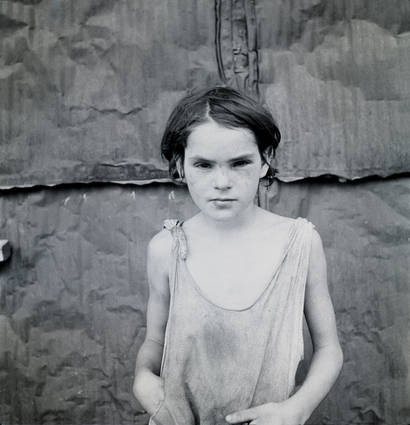
When I was writing A Cup of Dust a two characters just appeared on the pages. Weird, right? Well, not for novelists. This happens to us all the time.
One of them came with the name Beanie Jean.
See, I knew I wanted Pearl to have a sister. An older sister. Her name was Violet Jean, but folks called her Beanie. Then this line came to me:
“Violet Jean. The baby born blue as her name. Just thinking on it gave me the heebie-jeebies.”
That was when I knew that Beanie had some sort of impairment. Something that made her different, special.
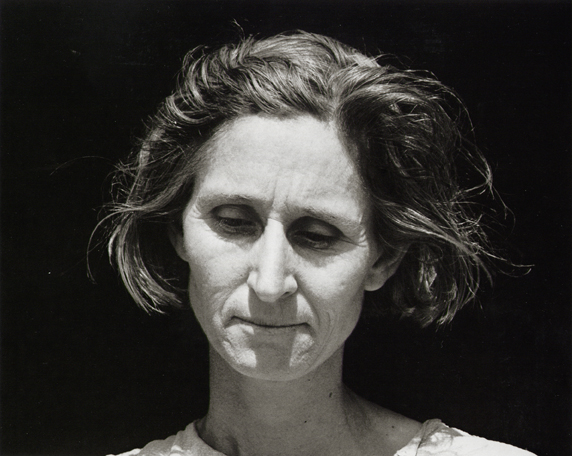
Then another character appeared. Mabel Anderson, the pastor’s wife. She was born of research into some of the superstitious things folks did to try and coax the rain. Some of them shot off fireworks, hoping to break open the clouds, others plowed more and more, believing it would invite the rain. Still others would kill rattlesnakes and hang them, belly up, on a fence.
And then I read about how some women went insane during the Dust Bowl. They hallucinated, went through long bouts with depression and anxiety, many ending up in institutions. Sadly, many others took their lives.
“Dust madness” it was called by some. It was much like “prairie madness” from the settler’s days.
While writing Beanie and Mabel I wanted to be sensitive. I didn’t want to exploit them or those I love who struggle with mental impairments or illnesses. What I hoped was to be able to give them humanity, dignity, a purpose in the story.
To tell the truth.
That we live in a world where special needs are real, mental illness is real. Too often we think of people who live with these struggles (either themselves or with a loved one) as “other”, “them”.
Let’s face it, there is a stigma. There was in the 1930s and there still is now.
But once we can see the person beyond the illness, impairment, disability, need – when we really see them for who they are, WHAT they are – we will see them for the made-in-the-Image beauties that they are.
So, I allowed myself to love Beanie and Mabel, the way one loves a sister or an aunt. The way one loves a soul who is precious to them.
And I hoped and I prayed that my readers would catch a glimpse of who they really were.
Mama had told me Beanie was slow. Daddy called her simple. Folks around town said she was an idiot. I’d gotten in more than one fight over a kid calling my sister a name like that. Meemaw had said those folks didn’t understand and that people sometimes got mean over what they didn’t understand.
“It ain’t no use fighting them,” she had told me. “One of these days they’ll figure out that we’ve got a miracle walking around among us.”
-A Cup of Dust, page 15
Interview with Author Susie Finkbeiner
I was honored to have been interviewed by Catie Cordero. You can read all about how I got started on this writing life, about A Cup of Dust, and my advice to new writers on her blog!
Also, while you’re there, look around at her other posts. She’s a novelist and I’m looking forward to the day when I can tell you how to buy and read her debut novel.
Go check it out! Thanks!


Today, I have the pleasure of interviewing multi-published author, Susie Finkbeiner. She is a wife and mother of three children, living in West Michigan. She grew up in an art-friendly home where art was not only encouraged; it was part every day life.
Not only is Susie a talented writer, but also, she is just a cool person. Let me introduce you to her now through our Question and Answers conversation:
When did you decide to become a writer?
I always wrote stories. Told them a lot, too (although some might call it “lying”…whoops). When I was in 7th grade my English teacher encouraged me to write more. At the time, I wrote terrible poetry about boys. Still, it seemed I had a knack for putting words together. Becoming a published author seemed an unlikely goal, though. I kept on writing little pieces of this and that, playing with genre…
View original post 1,043 more words
Dorothea Lange, The Dust Bowl, and Taking Notice of History

During The Great Depression the U.S. Government commissioned photographers to travel the country, chronicling the human element of how The Crash impacted the different regions.
Dorothea Lange and a few others spent a good deal of time in the Dust Bowl region (Oklahoma, Texas, New Mexico, Colorado, Kansas). What resulted were scores of photos which put a face on those suffering in the midst of a huge ecological disaster.


These photos and many more were published in newspapers read across the nation. Along with the pictures were the stories of the people. It humanized the Dust Bowl for those living far away from it. It inspired others to send help to those hurting so badly and suffering so much.
That’s the power of showing. The power of giving a name. Of telling a story.
And I think that’s one reason I had to write A Cup of Dust. Why I needed to tell Pearl’s story.
I needed to give the Dust Bowl folks their chance to say, “See what happened here? See how we survived. What we lost. What we gained. See what you can learn from us about love and loyalty, faith and grit, loss and hardship?”
We have so much to learn from them. And I don’t want their voices to fade.
Their story is our story. It’s time we took notice.
(To learn more about the history of the Dust Bowl, I recommend reading Tim Egan’s The Worst Hard Time and watching Ken Burns’s documentary The Dust Bowl)

You can order the Pearl Spence Novels from Baker Book House or wherever books are sold! The final installment of Pearl’s story, A Song of Home: A Novel of the Swing Era releases soon.
Room to Grow
Hey, Everybody! I have the honor of blogging over at the Breathe Christian Writers Conference blog today. Here’s a teaser of my post. Click over to their site to read the rest.
~~~~~~~~~~~~~~~~~~~~~~~~~~~~~~~~~~~~~~~~~~~~~~~~~~~~~~~~~~~~~~~~
The other day I transferred a plant from a small pot to a medium sized one. At first I worried that the  bigger pot would be too large, that the plant would look swallowed up by it.
I left the house for a few hours and when I returned I noticed that the plant looked like it had spread out. After a few days I thought for sure it had grown a little.
It turns out I’d been cramping the poor thing by keeping it in the small pot. It couldn’t grow until it had more room.
It made me think about my writing life.
Click HERE to read the rest of the post! Have a GREAT day!
Sweet Mary Spence
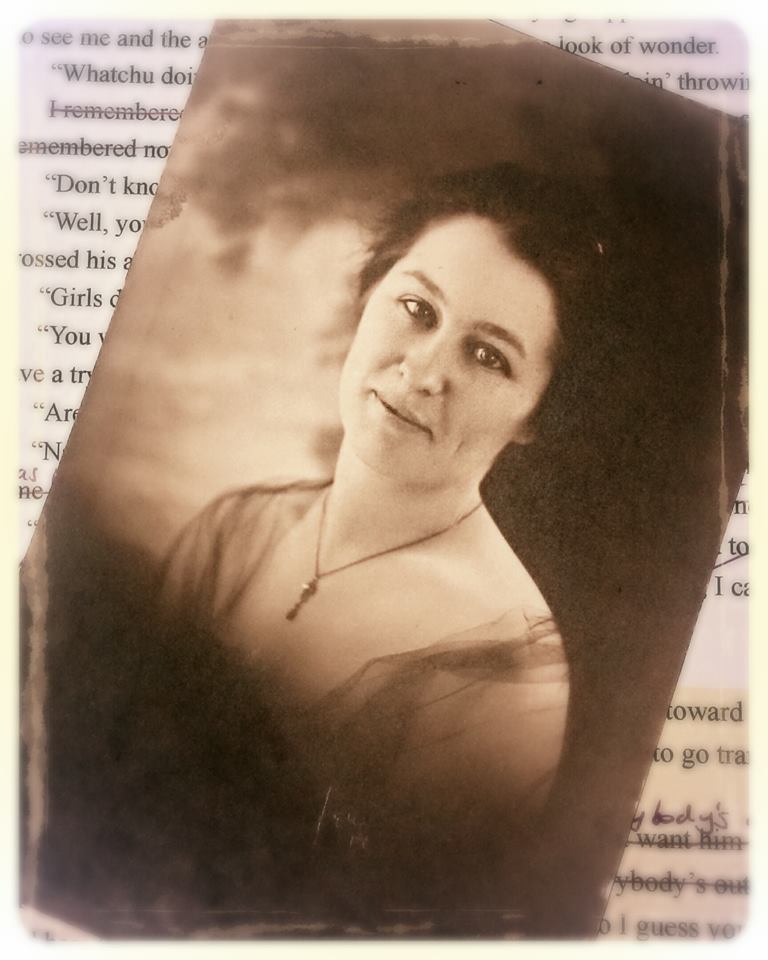 A few years ago I went to an antique store with my mom. She likes to look through the beautiful dishes and wall hangings and such. I find the nooks where the boxes of old family pictures are.
There’s something sad about sorting through these boxes. All of these beautiful photos, forgotten and sold for a few quarters. I end up adopting some of the pictures.
“What do you use these for?” one of the sellers asked one time.
“They’re characters,” I answered.
I found this picture while researching for A Cup of Dust. Holding it, I knew right away.
This was Mary Spence. Pearl’s mama.
As I read story after story of first hand accounts of The Dust Bowl, I learned about some of the incredible women who kept the homes running and the kids fed and the house from drowning in dust.
These women were courageous. But they were also compassionate, knowing that they had a responsibility to those who had things harder than them.
I remember a story of a woman who always kept butter sandwiches made up for when hobos came around looking for “make-work” to earn food or money. She never turned away a man who was willing to do a few chores.
A son told of how his mother battled against the dust to keep her garden as long as she could. It was a losing fight, still she didn’t back down.
So many stories…I wish I could share them all with you. That’s one of the reasons I’m so excited about this novel releasing.
As I wrote Mary Spence into the story, I wanted her to be all of those things I’d read about in the women I’d come to so greatly admire. And I wanted her to represent those women who didn’t break under the pressure. They didn’t break, but they still bent a bit. Who wouldn’t have? But the bending didn’t snap them, instead, it was what built more strength in them.
When I look into the eyes of the woman in the picture I found at the antique store, that’s what I see. Grace and determination and fierce love.
I don’t know the real name of that woman. I never will, I guess. But to me, she’ll always be Mary Spence. She’ll always be Pearl’s own mama.
 susiefinkbeiner.com