Hunky Knight Give-Away!
Wait. No. Not giving away a hunky knight. No.
Hm…
OH! I remember! Let me explain.
The other day, my senior editor, Roseanna White from WhiteFire Publishing dared me to incorporate a hunky knight into my current novel-in-the-works. Funny thing is…said novel is about a family of funeral directors.
So, I put it out there on my Facebook “Fan” Page. (Do you “like” me on Facebook yet? If not, pretty please…would you like me? You can see the page by clicking HERE). Well, we got some interesting ideas. I’ve collected them here on this post. What I need is for YOU to vote for the one that you like the most. I’m listing them by the first name of the contributor. All you have to do is comment below with the first name of the contributor.
By tomorrow night at 10 pm Michigan Time (the best time in all the world) I will declare a winner. The winner gets to pick one thing from my Etsy shop. In the case that the winner is a man and his wife/daughter/mother/grandmother/sister/cousin/neighbor doesn’t want anything…well…I’ll figure out an equally awesome prize. Like a box full of lug nuts or chocolate wrenches or something VERY manly.
Here are the ideas!
Jodi: could the knight be in a book that another character is reading? Maybe she compares her love interest with the knight and struggles with expectations.
Kathi: How about a flash back in time to the death of a knight and how his burial would have been dealt with. It could be a heart wrenching death in the arms of his damsel and what transpires with his body afterward.
{These next few build on a common idea thread…duke it out, friends)
Jenny: One of the funeral directors should secretly be a knight that fights at medieval festivals. But he is such a mild-mannered gentleman and so quiet spoken that no one would ever have thought he was a brash, daring knight as well. 🙂
Barry: Better yet he was killed while jousting at a medieval festival and the director has to hold a funeral with all the medieval re-enactors in attendance. Maybe the insist on a pyre?
Steven: (cross sectioning part of his novel with mine…Alex and Sheila are from his story) Alex and Sheila will go to the funeral in my book, at Susie’s funeral home, where they sort of mourn their knight friend, who accidentally stabbed himself in the foot with his sword, and instead of getting medical attention, insisted on staying in character and tried to put moldy bread on it, thinking the natural penicillin would work just fine and that antibiotics would seem too artificial. Alex of course, just trying to stay authentic, thinks that maybe they should just give him a good bleeding to expunge the foul bodily humors. Sheila votes for leeches. The knight dies while they debate, and then the dead corpse just narrowly avoids being served as the ‘Dragon slayer special’ at the Gabacker. I like it. Of course, in Susie’s book perhaps the scenario should be what do you, as a funeral director do when someone dies in extremely humorous fashion?
Jessie: Could one of the caskets or cold box things be a time portal? Seriously loving the funeral with all the reactors in attendance.
Nikki: The first thing I thought of was that someone in the book was having a dream about being a knight.
A few of these ideas already have votes. I’ll include those in the final count. NOW, you all need to get your family and friends to vote for your favorite!!! Ready. Set. GO!
**disclaimer: I’m not tied to using these ideas in the actual novel. Sorry. But, if I do, you’ll most likely get an acknowledgement for sharing a great idea…
Clutter Brain

CHECK IT OUT! I have a contest going on at my Facebook Novelist Page! Click HERE to see and enter! How can I incorporate a hunky knight (in shining armor) into my novel in progress about funeral directors! The idea that gets the most “likes” wins something from my ETSY shop! Winner will be announced on SUNDAY!
We have this huge shed in our back yard. It’s full of boxes from before we were married. All manner of treasures and junk that I have long ago forgotten.
Thanks to my husband, all the boxes are stowed on shelves. Otherwise, oh mercy, I shudder to think of the carnage.
I don’t go in the shed. It just plan overwhelms me. I see the boxes and know that I need to go through every single one. That I need to pull each item out and figure out what to do with them. Trash. Sell. Give away. Seems like a quick and easy process.
It won’t be.
I’ll find old notes from friends I haven’t seen in years. Some of those friends who have since died. Books from a Literature class I adored in college. Pictures. Oh, the pictures that will bring a lump to my throat. Memories of the days before kids. Before marriage. Before Jeff. So long ago. I’m a different person now. Thanks to God for that. Some of the recollections that a scrap of paper can evoke are painful. Others joyful. Still others will make me laugh.
Clutter is never just clutter. Boxes of old stuff hold the past. A past that sometimes I need to evaluate.
When I write, I let myself wander around the old boxes of thoughts and memories that are stacked from floor to ceiling in my brain. Some of the memories help me construct a character, a scene, a conflict, a resolution. These memories can be so raw that the only way I can safely process them is by writing them into a fictional situation. Allowing my not-real characters to deal with certain things that I lived helps me understand myself better.
Fortunately, I’m good at masking myself in my fiction. I hope, at least.
The point is, although a cluttered shed is annoying or frustrating, a cluttered brain, when used correctly, can be a positive for my writing life.
How do you deal with memories? Both painful and joyful? Does it help you to talk it out? See a therapist? Take a nap? Let me know. I love hearing from all of you!
“Just Gotta Love ‘Em”

Tonight I visited a friend in a psychiatric ward. Nothing dramatic happened. No violence or smelly rooms or scary people. Very little “One Flew Over the Cuckoos Nest” stuff going on there. The halls were clean and brightly lit. The staff was kind.
What I can tell you about my visit was that my friend wasn’t thinking within the context of reality. I’m not going to go into what she said or the hellish illness that ravages her mind. But I will tell you that mental illness is like nothing else in the entire world. A pain and confusion and fear like no other. My friend wept.
And there was nothing I could do for her.
I’ve known a few people who have suffered from extreme mental illness. These are people who are very dear to me. And, I’m just going to be honest here, I get so angry when I see what they have had to go through. What their families have to suffer. My rage burns from somewhere deep within me. Sometimes it’s directed at the circumstance or the people who have taken advantage of those who struggle to grasp reality. Other times I get angry at satan for attacking people’s minds in an attempt to destroy them.
Other times, I get really angry with God.
There. I said it.
Tonight, driving home, I let God know how angry I was. That my friend has suffered her whole life. That the other people visiting the psych ward were struggling with family members’ insanity. That, for some of them, the illness came on suddenly, without warning. That one day everything changed and spiraled into an abyss of disorientation.
“You could fix this,” I said to God. “You don’t have to allow it.”
There are a lot of easy answers for how I was feeling. “God is in control.” “Someday you’ll understand.” “God will never give you more than you can handle.”
Yup. Heard all that. Thank you.
But easy answers to hard questions are rarely the most helpful. And when I let my anger flood out of me, I felt peace. That my anger was okay. That God could handle it. No words. Just peace.
While I was waiting to see my friend tonight, I overheard a few of the other visitors chatting. Two sets of parents come to visit their mentally ill sons. One set lives in town. The other 2 hours away.
The parents who live 2 hours away visit twice a week.
“You drive all that way to visit?” the in-town father asked.
“We do,” the long-distance mother answered.
“It’s an awfully long way,” the in-town mother said.
The long-distance father shrugged his shoulders. Paused.
Then he said the words that have been swirling and ringing and singing in my ears all evening.
He said, “You just gotta love ’em.”
Reading Jonathan Safran Foer
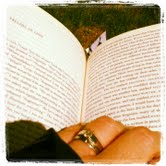
One of the very best things in the world is a good book. Couple that with a gorgeous day and I’m in glee (not the tv show). I love sitting in my backyard, reading while my kids play.
Recently, I read Everything is Illuminated and Extremely Loud and Incredibly Close, both by Jonathan Safran Foer. Two people who I respect both severely disliked “Extremely”. One for the protagonist, one for the writing style. I, on the other hand, read the book and loved it…for the same reason my two friends disliked it. But I’ve heard that said of Foer. Either you hate his writing or you can’t get enough of it.
I can’t get enough.
Here’s why. He is brave. He takes risks in his writing. He takes literary voice, adds in a little magical realism, and sprinkles on heartbreaking situations for his characters. Characters who are quirky and flawed and broken. Oh, how broken they are.
Foer’s novels spurred me on. Encouraged me to write with courage. To risk stepping around the normal plot structure of Christian novels. To write the kind of book that I want to write. Not the kind that I think I ought to write.
What makes you want to be better? What have you read/witnessed/lived that spurs you on to live more fully.
This isn’t just about writing, although it might be for you. This question is about life. And I’d love to hear about you.
Try New Things
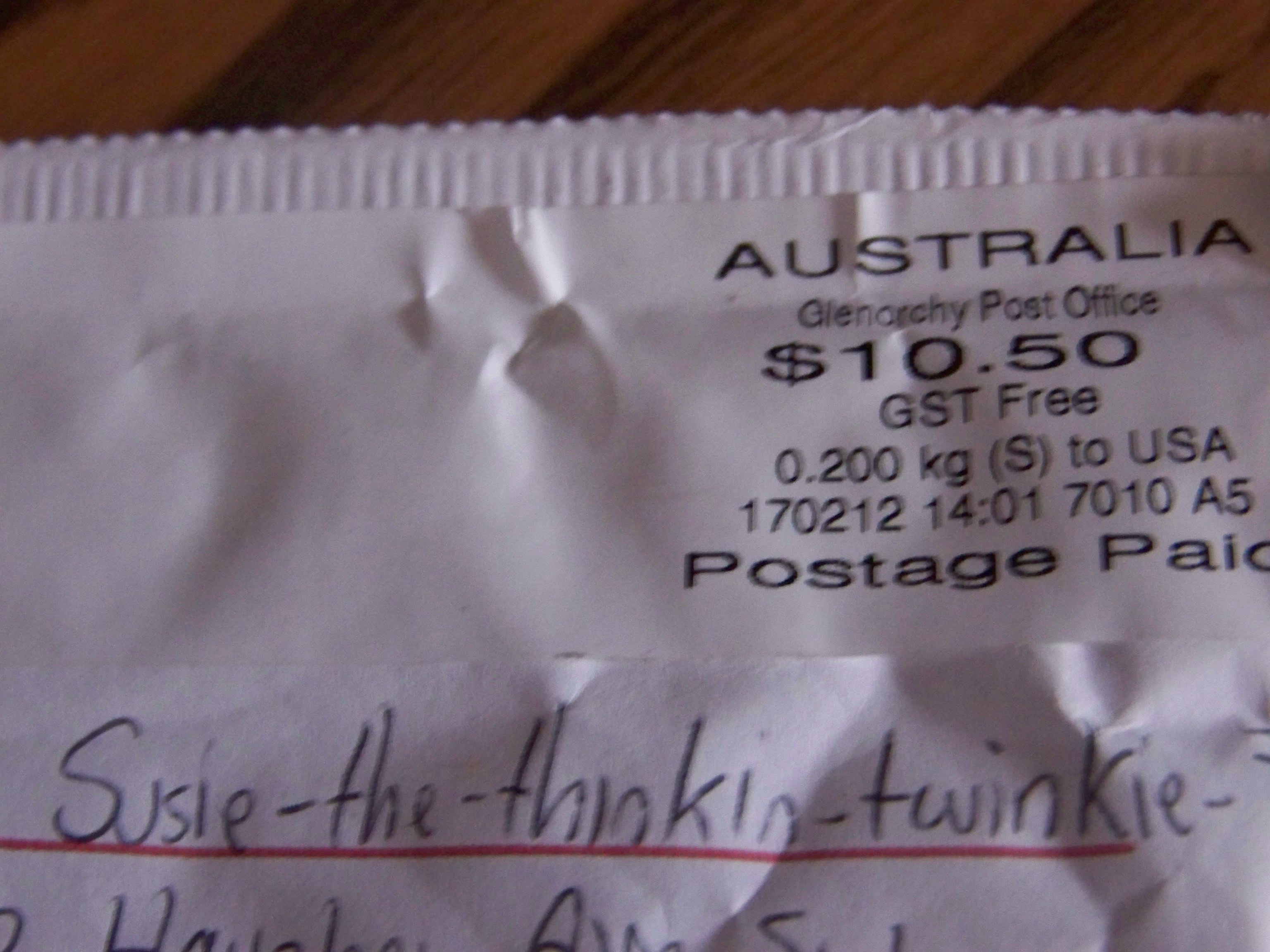
I love getting mail. Now, I’m not talking about mass mailers advertising window installation. And I certainly am not excited about receiving bills. But, when a friend sends a card, now, that’s when I get a little giddy.
Imagine my excitement when I received a package from AUSTRALIA!
See, I have this friend who lives in Tasmania (the small island at the very bottom of Australia). I met her through the Novel Matters blog. She is lovely and wonderful and will one day release a novel that will blow us all away. Her name is Megan Sayer (You’ll want to remember that name).
Megan sent me a gift. A gift that I was a little afraid of.
She sent me…
 Yup.
Yup.
Vegemite.
Yeast extract. The legendary favorite spread of the nation of Australia…
Did you know that New Zealand has something similar? It’s called Marmite. Word has it that Marmite is nasty compared to Vegemite.
Anyhoo…
I had to try this Vegemite. Because I had to show Megan that I’m cool. Because I had to prove that Americans are open to experiencing the traditions of other cultures. Because I love trying new foods.
I learned that the best way to eat it was to toast bread (preferably English Muffins) and slather with butter (real butter…margarine is nasty). Then mix the Vegemite into the butter. Oh, mercy. It’s good stuff.
Now, I admit, I am an adventurous eater. I love trying new flavors and textures of food. I’ve eaten quail eggs (that look unnervingly like eyeballs when floating in a soup), chicken feet, fish eyeballs (what’s up with the eyeballs?), fried rattlesnake (tastes like chicken), BBQ alligator, octopus, calamari, Twinkies (seriously, folks…those are the riskiest of things to eat)…
As a writer, it is important to try new things. To learn about the lives other people live. To “get into their skin” (in a non-Hannibal Lecter kind of way). Part of that is to eat new foods. Travel to new places. Read different kinds of books.
And I would venture to say that it’s important for all walks of life to try new things. It can make us well-rounded, educated, experienced people. AND, most importantly, it might just make us appreciate people who are not like us. People who have a different understanding of the world. It may help us to see the world in a different way.
Tell me…what is an unusual thing that you tried? What was the outcome? What is the craziest food you’ve eaten?

I Get By With a Little Help From My Friends
A struggling playwright, I was constantly in collaboration with directors, actors, production staff. A small group of Church-people, they loved me, supported me, encouraged me. A few times, telling me when I’d gone a little too far in pushing an envelope here or there. They cheered and gave hugs and high-fives when I had my first publishing success.
The church hired a new minister. He wasn’t supportive of the drama program. I got a job. Had a few more babies.
Life happened and my writing paused.
I started writing a secret novel. Ducked out of work early to write at a local coffee house. Terrified that someone would find out what I was doing.
Why?
I don’t know.
The writing was lonely. I didn’t know what I was doing. Had no mentors or cheerleaders. All my doing, the hermit-like-nature of my writing. I teetered on the edge of depression and anxiety (not to mention my work and church life “turned”).
What I needed was community.
I “came out”, telling my family and friends that I had a novel in the works. Met writer friends (the lovely Amelia Rhodes was my first reader). Started a critique group (I promise, these groups make you a better writer). Found a group of mentors at Novel Matters. Connected to other writers at The Festival of Faith and Writing and The Breathe Conference (you should come to Breathe…you really should).
My writing family has calmed me when I’ve freaked out over an unkind word. Told me to “keep at it” when I got rejection letters. Screamed when I got “THE” email.
Writers need people. Not just people. But relationships.
But not only writers. Every person needs that bolstering, cheering, loving, convicting circle of people. We are not meant to be alone. Relationships make us who we are. Without them, we flounder. Without them, we stagnate, unable to truly grow.
No man is an island,
Entire of itself.
Each is a piece of the continent,
A part of the main.
If a clod be washed away by the sea,
Europe is the less.
As well as if a promontory were.
As well as if a manor of thine own
Or of thine friend’s were.
Each man’s death diminishes me,
For I am involved in mankind.
Therefore, send not to know
For whom the bell tolls,
It tolls for thee.
John Donne
Tell me, who encourages you? Who prods you to look into the dreams you have and convinces you that they are worth trying? Who are your cheerleaders?
Toes in the Grass
 My kids love running around in the grass without shoes on. In the mornings, the blades are moist with dewdrops. Afternoons, they are full of critters to find…those roly poly things, moths (that my kids INSIST are butterflies), worms. And, in the evenings, the grass is cooler on those little piggies. Besides, there is just some kind of wonder about being outside past your bedtime. Right?
When my daughter was a toddler, I feared that bare footed adventures would result in banged up toes and blistered soles. What if she stepped on a bee? Or a piece of glass? Or, good heavens, what if she stepped in the pile of dog poop we missed?
And, yet, she’s always loved stomping around, the skin on her feet stained green by the grass. Arms flailing and swinging around her as she leaps and twirls and runs. Dark brown hair wiping around her. Sparkle in the eyes. Smile so wide it might just change my life.
When my daughter has her toes in the grass, she is full of joy. She is living life fuller than I’ve known for (ahem) twenty some years.
Sometimes, life as a writer can feel like a practice in voyeurism. I watch other people living life so that I may construct characters and worlds for them to live in. I sit at a computer, my imagination becoming words on the screen. So very often I forget that I have a life of my own.
One of the very first warm days of this Spring, my daughter galloped outside and kicked off her shoes. She came to me, wiggled her toes and smiled. Oh. Her smile.
“I love having my toes in the grass,” she said. “There’s nothin’ like it. Nothin’ in the world.”
“Oh, yeah?” I asked, looking up from the book I read.
“Yup. You should try it, Mama.” That smile.
I slipped my feet out of my sandals. Put my toes into the grass. Cool, refreshing, real.
The writer learns that life must be lived. Not only observed. The writer must take her shoes off and let her feet become stained green with the grass.
**This is true, by the way. If you’ve followed this blog for any amount of time, you’ve come to expect fiction. I’ll be switching it up every now and again. 🙂
Nothing to Hide–Inspired by Darcie Apple
Harvey closed the heavy, wood door of the barn. The last milking of the day done, he headed toward his old farmhouse for supper. He knew it would be some kind of meat, cooked perfectly, falling apart tender. Potatoes fried and salted. Corn and green beans. And a big glass of milk with ice cubes.
But first he’d need to scrub his hands. His wife would insist. Every night for thirty-six years she would hand him a bar of soap and send him to the washroom sink to scrub.
Thirty-six years of marriage. They’d been nineteen years old when they married. The thought made him chuckle as he scuffed his feet before opening the storm door to the house.
But then he remembered what happened. The night he failed. Right before the wedding. He had been so afraid of the forever that marriage meant. And so he faltered.
He never told Bea. Never let on that anything happened. He just closed that memory up in his soul.
Three months after his wedding day, the world collapsed with the stock market. His mind switched. Harvey no longer needed to think about that mistake. Everything was all about surviving lost investments, lost jobs.
That’s when they moved onto the farm with her parents. A city boy turned country. Turned farmer. He hated it at first. His soft hands had to grow thick calluses. His nose needed to become accustomed to the smells of animals. The nights were the hardest. Trying to sleep without the sound of city living was impossible for the first three years. He had to learn to be soothed by the sounds of crickets and roosters.
But the big benefit, what made country living worth everything he missed about the city, was the privacy. Nobody looking into your windows. Nobody knowing a man’s business. He could be alone when he wanted to be alone. A man could keep his secrets to himself in a land that large.
On that night, just before going into the house, Harvey stood and looked up. The moon looked like a thumb nail somebody just bit off and spit onto the ground. At least that’s what he thought it looked like.
Just like the moon looked that night. With that other girl. They walked through the tall grass and looked up at the moon. Memory threatened to flood back. Harvey refused to let it. He walked into the house.
“Oh, Honey, it smells good in here,” he said. “Whatcha got cookin’?”
“You’ll find out as soon as you wash up,” Bea said, handing him a bar of soap. “But do it quick. I don’t want your food getting cold.”
“I wouldn’t dream of keepin’ you waitin’, Darling.”
“Make sure you don’t.” She smiled at him.
As he washed, he looked over his shoulder at the kitchen table. Set for two. Only two. Never three like it used to be. Not since their boy Carl went to Viet Nam. And never again since he came home under a perfectly pressed American flag. One of the first to fall in that war. One of the very first heroes from over there. He pushed that thought away, too.
“All ready,” he said. “Now what are we eating?”
“Roast.”
“My favorite.”
He sat at the table next to his wife. They held hands as he prayed. It was a simple prayer. Not too long. Just long enough to thank his God for providing and healing.
He served the meat. Bea served the rest. Silver clinked on china.
“This is great, Bea Baby.” He smiled at her.
“Well it ought to be. It cooked all day,” she said, teasing.
Harvey could still see the sadness in her eyes. It broke him that he couldn’t figure out a way to make it better.
“Are you missing him today?” he asked.
“You got a telephone call today,” she said, brushing off his question. “I took down the number. Some man named Charles. He said you would know him as Chuck.”
Harvey lowered his fork. Stopped chewing. “Did he happen to say his last name?”
“Oh, goodness. Something terribly Irish.” She said. “McQuinn or McKinney. I can get the message.”
He smiled quickly. “No, Darling. We’re eating supper. I’ll take a look at it later.”
“Well, whoever he is, he said you were good friends when you were kids.”
“McKinney. Chuck McKinney,” Harvey said. “I suppose we were okay friends.”
“He’ll be around tomorrow sometime. I told him to come on by for dinner. Right around noon.”
“Did he say why he was coming? I haven’t seen the man for years.”
“I wonder if he wants to offer his condolences.”
“‘That’s awful kind of him.” Harvey stabbed a piece of meat. “Seems a terrible long way for him to come just to say he’s sorry for our loss.”
They finished their meal in silence.
The next morning, after his first chores, Harvey sat at the table, drinking coffee. Bea moved nervously around the kitchen.
“Do you think that Charles likes stew?” Bea asked. “I should have done steaks.”
“Stew will be fine, Honey. That’ll be just fine.”
“I sure hope so.”
“Suppose I should go get myself cleaned up.” Harvey stood and walked toward the stairs. “By the way, you look beautiful.”
“You’re too sweet to me.” She smiled.
That smile always made Harvey’s heart warm.
His bedroom was bright. He undressed, letting the warmth of the sun rest on his skin. That was another thing he had to learn when he moved out to the country. Dressing in front of uncovered windows. It took him a long time to remember that it was okay. That no one would see in. The closest neighbor was two miles away. Nothing had to be concealed. Nothing covered up. Because no one was there to look in. No one saw the things that Harvey wanted to keep private.
At noon, on the dot, Charles McKinney pulled up to the old farm house. He drove a brand new Chevrolet. A dusting of dirt road was on the fenders. Harvey watched the man get out of his car. He wore a three piece suit and carried a briefcase.
“This isn’t just a friendly visit,” he said. “Bea, after we eat, I want you to go into town. Just say you have a ladies meeting or something. Something just doesn’t feel right about this.”
Because of his tone, Bea didn’t protest. She went into the dining room and finished setting the table. Harvey walked out to the porch to greet him.
“Well, Chuck, welcome,” he called, trying to appear casual. “Come on in.”
“Harvey, it’s nice to see you.” Chuck walked faster, extending his hand. “You haven’t changed a bit.”
“Oh, I don’t know about that. I’ve changed plenty.” Harvey opened the storm door. “Come on. Let’s get you some dinner.”
The three ate stew poured onto buttery biscuits. Chuck told Harvey all about law school. His career as a district attorney. His wife and kids. Bea poured coffee from the peculator and brought out sugar cubes and fresh cream.
“Now, gentlemen,” she said, putting a plate of cookies on the table. “I have to get going. Sewing club. I can’t miss a single meeting.”
Chuck stood. “Bea, it was just lovely meeting you. Now I know why Harvey ran away from city life so quickly.”
“Well, that’s awful kind of you,” she said. “Now don’t you leave a single cookie for me. Eat them all. You hear?”
“Thanks, Honey,” Harvey said.
She kissed his cheek before she went out to the truck and drove down the road.
“So you’ve been farming, huh?” Chuck asked, biting into a cookie. “You never seemed like a farmer.”
“Well, when the market crashed I had to do something,” Harvey said. “I got stuck doing it. It’s a good life.”
The two men sat for a few moments in silence.
“Listen, Harvey, you know I’m not here for small talk.” Chuck sat back in his chair. Loosened his tie.
“Bea seemed to think you were here to offer condolences.”
“Oh, yes. Terrible thing to lose a son to the war. Terrible indeed.”
“But you aren’t here for that, are you?”
“I’m here on a personal matter.”
Harvey pulled a pack of cigarettes from his shirt pocket. “Let’s go out on the porch.”
The two men stood on the porch. Harvey smoked, hoping to calm his nerves.
“Someone is looking for you,” Chuck said, breaking the silence.
“That so?”
“I thought I’d come out here and let you know about it.” Chuck paused. “You just tell me if you decide you don’t want to be found.”
“Who is it that’s looking for me?”
“I know about your night with Violet. Just before your wedding.”
Harvey tossed his cigarette butt into the grass. “Yeah?”
“I saw the two of you walking. Saw you going into that field. Saw you after, too, getting yourselves dressed again. You didn’t know I was there.”
“What? Were you following us?”
“She was my little sister, Harvey.” Chuck turned his head, looked at the miles of growing corn. “I should have stopped you. I just didn’t know what to do.”
“Did you tell anybody?”
“No. I never wanted to.” Chuck crossed his arms over his chest. “It would have killed Violet. She told everybody that she got hurt by a man she never knew.”
“I hate myself for that night. It wasn’t right.”
“She was okay, you know. She never expected anything from you.”
“How do you know that?”
“She told me. Just a couple months ago.” Chuck rubbed his head. “She’s dead. Died of consumption or something.”
Harvey lit another cigarette. “I’m sorry about that. She was a good girl.”
Chuck leaned on the railing. “She had a baby. A girl.”
Harvey turned his head, looked at Chuck. “That’s why you’re here?”
“Her name is Barbara. She lives about an hour from here.” Chuck put his hand on Harvey’s shoulder. “She’s married. Has a couple boys. She just wants to know her father.”
“Does she know who I am?”
“Nope. I haven’t told her. I wanted to talk to you first.”
“You sure she’s mine?” Harvey leaned against the railing. “She couldn’t be from anybody else?”
“Nope. Violet didn’t have any other men. Not ever.”
Harvey squatted down. Tried to make himself small. He didn’t know why he wanted that. He just knew that he wanted to hide. “Bea’s going to kill me.”
“Listen, Harvey. It’s up to you. You don’t have to tell her. This can be just between us.”
“I lived with this secret for so long. I couldn’t live knowing that I’ve got a daughter I’ve got nothing to do with.”
Chuck opened his briefcase. He pulled out a picture. “This is for you. That’s a picture of Barbara and her family. Her boys are three and two years old.”
Harvey looked at his daughter. Ten minutes before he hadn’t even known she existed. Looking at the photo, his heart swelled. She had the same smiling eyes that his mother had. And the boys. So handsome.
“I’m a grandfather,” he said. “What are their names?”
“James and Peter.” Chuck pointed at the picture. “And they are full of trouble, those two.”
“Oh, I bet.” Harvey smiled. “I bet they are.”
The men stood, looking at the picture.
“Well, I need to get going,” Chuck said, closing his briefcase. “Talk to Bea if you want. Just give me a call when you decide what you want to do.”
“We want them.” Harvey pushed down his emotion. “You just tell Vickie that we want them. I’ll talk to Bea. She might kill me, but she needs these kids. She hasn’t been the same since Carl got killed. She needs these boys.”
“You just call me when you’re ready to see them.” Chuck walked to his car and opened the door. “You’re a good man, Harvey. I always knew you were.”
“I don’t know about that.” Harvey smiled. “But I want to do what’s right.”
Harvey watched Chuck drive down the road. As soon as he was out of sight, he let himself feel. He let himself weep. For Carl. For Violet. For Barbara. For the pain that this would bring Bea. For the end of his gnawing secret.
When it was all done, Harvey went inside to clean his face. He didn’t want Bea to see that he’d been crying. He sat on his bed. The emotions over took him again. After awhile he regained himself. Walked over to the window.
The window with no covering.
He had nothing to hide.
Things I Learned — Recap of the Festival of Faith and Writing (especially for my friends who couldn’t attend)
Last week (Thursday through Saturday) I attended the Festival of Faith and Writing at Calvin College in Grand Rapids. The Festival concluded last night. So, for some reason, this morning seemed like a good time to write down things I learned.
Sorry for the departure from fiction today.
Thursday
The day started off well. Coffee and registering for the Festival. I ran into a few friends (that I only see every other year…and only at this event). Found my dear Jessie Heninger, Amelia Rhodes and met new friends Heather Briscoe and Lisa Littlewood. I could drop some other REALLY big names…but these four are big enough for me. I love these girls.
(From here on out, most name dropping will be the writers that I heard speak. 🙂 )
Our first stop was to sit and bask in the greatness that is Gary D. Schmidt (if you haven’t read his books…well…get on it). Here are two quotes from his talk. Oh. So beautiful.
“Story makes us humane and more human.”
“How do I live in this messy world now?” (the question writers need to ask and seek to answer)
The writer, Schmidt said, needs to ask his/her question “what ails thee?”. Therein lies the story.
Next I attended a session called “Ours and Not Ours: Writing the Immigrant Experience”. Full disclosure; I went to see Hugh Cook. But I was honored to listen to the experiences of Kristen den Hartog, Cornelia Hoogland and John Terpstra. Each of these writers spoke of their parents’ or grandparents’ lives after immigrating from The Netherlands to Canada. Hugh Cook was the only one who had actually immigrated as a child. They discussed the feeling of being “in between”, being “without a language” and reclaiming the lost history of their families.
After a coffee break (that may or may not have involved cookies), I headed over to hear Kathryn Erskine present a talked titled “Be Careful or You’ll End Up In My Novel”. Right. Yup. It was THAT good of a session. Lots of fun stories. Lots of discussion about observing those around us. Here are a few bullet points from that talk…
~Become your character: do what your character does. For example; walk in the rain, drink what they would drink (within reason, of course), eat what they would eat.
~Be aware of personality traits you can harvest from people around you; facial expressions, vocal inflection, quirks (you know how much I love quirks). Also, research those who are not around you. Read books, listen to music, watch movies.
~Write character sketches and interview y our character. Ask your character “What do you REALLY want?”.
I hiked a good distance to attend a session called “Telling the Truth in Love”. It was really about writing Memior…but I was tired and hungry and didn’t know what else I should find. As with all things Memior, the room was PACKED! And mostly with women. It really wasn’t the session for me. However, I did get to hear the experiences of Amy Julia Becker, Jennifer Grant and Margot Starbuck.
That evening I heard Jonathan Safran Foer (who must not have a website…but he HAS been on The Colbert Report a few times). He spoke of life and mentors and love. He spoke of religion and fatherhood and writing. He is clearly a VERY smart person (think Zooey Glass from “Franny and Zooey”). But he is a smart man who said “I was completely out of my elephant…elephant? No. Element.” But, trust me, that wasn’t all I got out of his talk.
Friday started early. But it also started with a fantastic session titled “Beautiful Souls and Interesting People”. The presenter had my utmost respect before he even began to speak. Daniel Nayeri wore pink Converse All-Stars. But then he did begin to speak. And I was even more intrigued! He discussed that nearly everything is art…and a form of worship. It is one of the things that makes us human. Let me share a few quotes from the session…
“All art is directive.” (this was actually from Gary D. Schmidt)
“In the land of ‘Do-As-You-Please: Art loses context…but not the proposition. Art still presents a set of desirable traits in ‘the good life’.”
“To be interesting, art must instruct the conversation of our age by laying bare its worshipful fascination with a god, and by giving us a compelling reason to sit at the foot of that god and worship.”
Second session of the day was called “The Word Needs Flesh”. I…uh…thought it was something different. I guess it was an alright discussion of the “sex” dialogue. And I may or may not have giggled like an uncomfortable 13 year old throughout most of it. And I was in the front row. (The presenters were John Estes and Amy Frykholm.)
After the blush mostly drained from my face, I had the opportunity to sit down with Ann Byle. She’s a literary agent here in Grand Rapids and has been in the publishing business for years. She knows what it’s all about. I got to pick her brain for a few minutes. She’s great.
The next session I chose was “Divine Madness” with Debra Dean and Luis Alberto Urrea. They talked about how they found inspiration for the unlikely novels they’ve written. The acknowledged how crazy and mystical the experience can feel. And the two of them were hilarious. Here are two quotes from the session (both from Luis). The second one really encouraged me in what I write…
“There’s something to be said for the voices, both pro and con…”
“Make it funky…if you can find God in the funk and the mud, then you got it.”
I filled my mug with hot coffee and headed off to a session with Daniel Nayeri, Gary D. Schmidt and David Diaz. The three told the story of the making of “Martin de Porres: The Rose in the Desert”, a picture book that will be released later this year. It was interesting to hear how the process works. Someday I would like to write a story book. I think it would be great fun.
The evening plenary speaker was Marilynne Robinson (another author for whom I could not for a website. Strangely enough, she has appeared on The Daily Show). She spoke about “Casting Out Fear”. We have nothing to fear. And, yet, so many are striving to MAKE us afraid. Cast that out!
Friday began with a session titled “Writing What We Don’t Know” with Debra Dean. She discussed the importance of fiction (which I concur) and the possibility of writing, not what we know, but what we WANT to know. Her novel “The Madonnas of Leningrad” is on my “to read” list.
I climbed into a van and was whisked away to hear Shane Claiborne. He spoke about peace and Jesus and using our art to change the world. Not for our gain. But for love and justice and mercy. He told stories of working with homeless in Philadelphia, serving with Mother Teresa and travels to Iraq (without a gun). A few things he said resonated with me. These aren’t direct quotes…but they are great concepts.
~Violence has no imagination. Just shooting a gun or starting a war is the result of a lack of creativity.
~When we become so focused on our goals and/or ministry and what we want to do for others, we destroy community. But when we focus on loving people around us community is built.
~Take time to sit and sip tea.
I also sat through an interview with Shane. It was great.
The rest of the day is a swirl of good-byes and eating dinner with some great people (Amelia, Jessie, Heather, Lisa, Allison Hodgson, Lorilee Craker, Ann Byle and Cindy Bultema …I know I said I wouldn’t name drop anymore. Sorry).
Last night I got home and was absolutely exhausted. But I was also fully nourished and ready to keep writing.
If you’re a writer…well…you need to be going to conferences. It makes all the difference. There is a GREAT one in October called The Breathe Conference. It’s fantastic and intimate and a wonderful place to meet other writers.
Thanks for indulging me in my Festival wrap up. And, for those of you who wanted to attend, I hope this was at least a tiny bit helpful.
Bag Lady
Writers need support. Seriously, we do. And we need mentors. People who have been where we are. Who have stared down the blank page. Have been rejected and accepted and dejected and encouraged.
Some of my mentors are found at Novel Matters. This blog has taught me so much about the writing life. And the ladies who write for the site have been more than encouraging to me. Check out their blog on Monday, Wednesday and Friday to reach rich posts about all things bookish and writerly.
Anyway, Bonnie Grove (author of Talking to the Dead, one of the best novels I’ve read…buy it on Amazon for $6. BUY it!!!) wrote a great post on Friday about writing prompts. I, for one, LOVE writing prompts (see nearly every blog post in my history). She put one out that was SO ME! Here it is…
“A bag lady finds a crying baby in a back alley dumpster.”
And here is the story I wrote.
The woman pulled the red stocking hat down over her ears. The wind whipping through the alley singed her skin with cold. She held the collar of her coat under her chin. Wished she had a scarf.
“It’s worth the cold,” she thought out loud. “What’s in the food box is worth anything.”
She followed the smells of the restaurant. Frying potatoes and roasting meat. Fresh bread baking. No matter how cold that alley was, the smells of food made her feel warm. But the food she would have wasn’t warm. It would have cooled from sitting overnight after the dinner crowd had left. Dumped in the morning by the lunch cooks.
“What treasures today?” she asked herself. “A little fried chicken, maybe. Or a slab of beef. I hope for some green beans. That would make me happy.”
She flashed a memory. Her mother, putting out dishes on the table. The crisp, starched, white table cloth. The one with embroidery along the edges. Small flowers of blue and yellow. She would finger the lines of fabric that ran through the linen. Smell the food. Hear the clink of silver on china. The sun always seemed to shine through the windows.
“No rainy days,” she said, remembering. “Always good weather. Always smiling faces.”
Then another memory flashed. Her mother, pushing her down the cellar steps. Screaming. It was so, so dark down there. The rats’ claws made scratching sounds on the wooden stairs.
Which was true? Which memory?
“Fried chicken and mashed potatoes. We’d eat that every day,” she said, walking down the alley.
The dumpster behind the diner was shut. She had to flip the lid up. It clanged against the concrete wall.
She flinched. Hid for a second. The manager of the restaurant didn’t like her going through the dumpster. He would yell and try to chase her away with his spatula in hand. He was nothing more than a noisy dog. He didn’t scare her.
“If he wants me to stay outta the food, he’d better just bring me out a sandwich,” she said, glowering at the back of the restaurant.
Not seeing or hearing the manager, she reached into the big, metal bin. That day her hands felt something different.
“Oh, oh, oh,” she said, fingering the soft blanket, her armpits resting on the edge of the dumpster. “No, no, no.”
She could swear that something under the blanket was moving. Wiggling.
Then she heard the cry. Her brain snapped backwards, into a memory.
Out in the field with her big brother. Him with a sling shot. Shooting at the rabbits. He wasn’t a good shot. Either that or he was cruel. He hit most of them in the side or on the back. They would keep running, scared and hurt, screaming just like a baby.
“God,” she whispered to the blanket. “Them rabbits cried. Just like a baby.”
Lifting the soft, filth covered blanket, she saw it. The flesh of the thing was so yellow. Touching the skin, it was so warm. Hot, even.
“Who would’da did this?” She looked all around her. No one was there. “Who would’a?”
Breathless, she picked up the small creature. It changed. Purple. Blue. Green. Like a vision sweeping and swirling in front of her eyes. In her hands.
“No. That’s not real,” she said, shaking her head. “What is real?”
The dumpster. The hard, cold concrete. The stink of the alley. All real.
Was she real? No telling. The baby? Was it even a baby? Or some lump of leftover ham that went bad in the restaurant fridge. She could never be sure.
Just in case, she carried the bundle, still crying like a rabbit, to the streets. She shushed the sounds. Told it that everything would be okay. That they would find help. Cooing and muttering. The cry didn’t stop, though.
A man walked by. Full suit. He talked on a phone. Walked with a purpose.
“Hey, mister!” she yelled out to him. “Mister, I need your help.”
He turned his head. “Can’t walk out here without some bum wanting a buck,” he said into the phone.
“Can you tell me if this is real?” she asked him. “I found something in the dumpster.”
He shook his head. “Listen, I’ll call you back.”
She walked toward him. The sound was a wail.
“I just need you to tell me if this is real,” she said, holding it out toward him.
He looked at what she held. Laughed at her. Pulled a dollar from his pocket and gave it to her. Walked away.
She chased after him. Calling out to him. But then he turned into a monster. Hairy and growing with each step he took. He turned to her and growled.
“That’s not real,” she whispered to the blanket in her arms. “What is real?”
The blue sky. The stinging cold. The cars driving past.
The face of the baby in her arms. The quieting of the cries. The tiny splashes of rain she felt on her nose.
Memory flashed.
She sat up in the top branches of a tree. Hiding. She didn’t know who she hid from. Her mother? Brother? Father? Herself? How could she hide from herself? The rain started to fall. But it never rained. It was always sunny. She changed it in her mind. The rain stopped. The sun beamed.
What was real?
Was it the sun or the rain or both?
“Just tell me the truth for once,” she said. “Stop lying.”
Someone walked past her, staring.
“Was it rain or sun?” she asked the passerby. “Do you know?”
The person walked faster.
“Can you tell me if this is real?” She held out the bundle. “Someone tell me if this is real!”
The crying started anew. She touched the bundle. The skin had turned cold. Rubbery.
Flash. Memory. She stopped with the thoughts.
Pouring down rain. Up in the tree. Her mother screaming inside the house. Crashing china plates against the kitchen wall. The linen tablecloth covered with stains. Covered with mashed potatoes and chicken grease.
A crying rabbit in the field. Her brother killing it. Or was he gone by then? Wasn’t he gone on the day of the smashing plates? Yes. He and Father were gone.
Father and son both gone away never to return again.
The words chanted through her brain. Like a prayer. Up in the tree. Never to return again.
The rabbits were crying in the field. But she heard the screams still. The wails. The terrible horror of something in pain. In fear.
She felt the rain, held the bundle closer.
“No more memories,” she said. “Tell me no more. Never to return again. Amen.”
The thing in her arms shrieked. Louder. Higher. More frantic. She neared a bench. Near a bus stop. Sitting, she patted the bundle. Caressed it.
“Look at her,” a teen boy said, pointing. “Whatcha think she’s on?”
“Probably drunk,” his companion said.
They stood feet from her.
“Where you think she got that?” one asked.
“Don’t know. Don’t really wanna know,” answered the other.
“Hey, lady,” the first one said. “Hey. Where’d ya get that thing?”
She turned. “I found it.”
“Where at?”
“In a dumpster.” She looked at the boy. She wanted him to look like her brother. But he didn’t. Not even a little. “Can you tell me. Is this real?”
His friend nudged him. Laughing. But the one boy. He didn’t laugh. He took a half step toward her. Looked at the bundle. She thought his eyes looked kind. Not like her brother. Not even a tiny bit.
Never to return again.
The boy cocked his head. Looked at her face.
“Is it real?” she asked again. “I can’t tell.”
His eyes changed color. Over and over again. A bird landed on his shoulder. Was she that bird?
What was real?
She didn’t know.
“Is it real?” she asked one last time.
“Well,” he said. “What do you think?”
“I don’t know.”
“It’s a chicken. Like the kind you buy in the store.” He looked at his feet. “It’s a real chicken. But it’s real dirty. You should throw it away before it makes you sick.”
She looked from the boy to the bundle. Bumpy skin. A hole where the head would have been. Did it smell? She couldn’t smell it.
“But it was crying,” she said. “Just like a baby. Like a scared rabbit.”
“Let’s get outta here,” his friend said. “She’s just a crazy old lady.”
“Just a sec,” the boy said. He looked back at her.
“It’s been crying and screaming.”
“Was it crying just now? Before we started talking?”
“Yes. It was terrible.”
He kicked a piece of loose concrete. “It wasn’t crying.”
“You didn’t hear it?”
“Well, that chicken wasn’t crying.”
“Then what was that sound? What is real? I can’t tell.”
The boy. His hair short as a fresh mowed lawn. The way he talked so kindly. Those things were real.
“It was you.” He looked away, embarrassed. “You were crying.”
“Yes. That was real.”
Flashed memory.
The tree. Breaking plates. Father and son both gone away. The pouring down rain.
And her. Up in the tree. Screaming like a rabbit. Like a little baby.
That was real.
 susiefinkbeiner.com